Our history and or origins
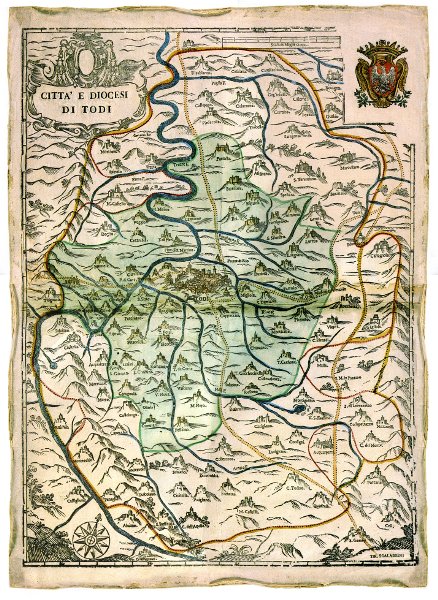
In the 212 B.C. Caio Flaminio constructed the road Flaminia Vetus that joins Rome to Ariminum (Rimini).
Along the road mansiones were constructed every 15-18 miles to offer hospitality to dignitaries without legions in Umbria to: Narnia (Narni), Carsulae, Martana (Massa Martana), Mevania (Bevagna); the dignitaries in charge of legions, instead, built some castrum (encampments); a private system of hospitality called cauponae (huts) arose for carters and travellers.
Between Martana and Mevania where many roads (that still today connect Todi, Massa Martana, Foligno, Spoleto) join the Old Flaminia, one of these cauponae arose: the Cappanna of the bastard.
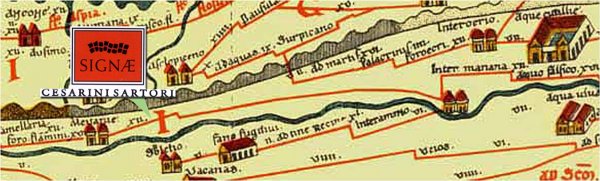
The centre practicability and the enterprise of the Host, soon transformed the Cappanna in one of the best meeting-place near Rome, for anyone liked to transgress and scialare (to enjoy) through the good food, the good drink and the beautiful living. They served scented wine.
In the 79 B.C. Plinio the Old one in book XIV of the Naturalis Historiae said that this vine was cultivated only in the area of Mevania and it had similar characteristics to the present Sagrantino.
Also the Longobard domination in the high Middle Age leaves traces of vineyards in the area, but it is an unquestionable certainty that in our lands there were areas planted with vines. It results from the Land Register of 1340, kept up in the Historical Archives of Todi and also from the Gregorian Land Register (1800) where the names of Vignone and the Vines emerge in our hill.
From 1540, the beginning of the grape-harvest in the municipality of Montefalco, was notified with municipal advertisement.
The old ones of the place told that, before the wars, the better wines of the zone were obtained to the Vignone of the Marchetti.
After a careful historical search and the analysis of the pedo- climatic conditions of the area, we have convinced that on these lands we had to settle our vineyards.
In the higher land of the hill, the Field of the Maestà, near to the Cappanna of the Bastard, we had to build our wine-cellar.
After these studies, the choice of the clones and the native vines has been consequent and easy.
The cultivation of lands has been made with the breaking up plough until 39 inches of depth, the manuring has happened only with bovine dung. The vineyard has been build with the sixth of the establishment for 5,208 vines for hectare, with single six-spins wooden poles and on the axis of the noon. The pruning and the tying of the vine on the small pole since the first season, today render the vine and the hill very elegant.
We continue to cure our vineyards and its cultural phases as in the gardens in order to obtain a few bunches for each vine that, ripening, they are selected by hand and moved in boxes to the wine-cellar on the selection table; after rasping, all the residual of rasps is removed on a second table.
The wine-cellar has not any tank for of the grape harvest and it has been planned totally buried, perfectly integrated with the environment and isolated from electromagnetic fields;its layout permits a minimum use of pumps.
The business choice favours the use of 10, 20 and 30-hl oak cask of Slavonia.